Weeping Tile & Drainage Systems
Most wet basements start with poor drainage. We fix the way water moves around your house — so it's carried away instead of pooling against the foundation.
Window well, weeping tile and surface drainage that moves water away from your foundation.
Before water gets into a basement, it has to get to the foundation and sit there. Collapsed or clogged weeping tile, a window well with no drain, downspouts dumping at the wall, grading that slopes toward the house, a sewer that backs up in a storm — these are the causes behind most of the leaks we're called to. Fix the drainage and many basements simply stop leaking.
We replace failed weeping tile, install window well drains and covers, fit backwater valves to stop sewer backup, correct grading and manage downspout and sump discharge so water ends up well away from the house. Several of these items qualify for municipal subsidy programs, and we'll help you claim what applies.
- Weeping tile replacement & repair
- Window well drains & covers
- Backwater valve installation
- Grading & surface drainage correction
- Downspout & discharge management
How we fix drainage
Inspect and find the cause
We look at how water reaches your foundation — roof runoff, grading, window wells, the condition of the existing weeping tile — and identify what's actually failing rather than guessing.
Replace collapsed or clogged weeping tile
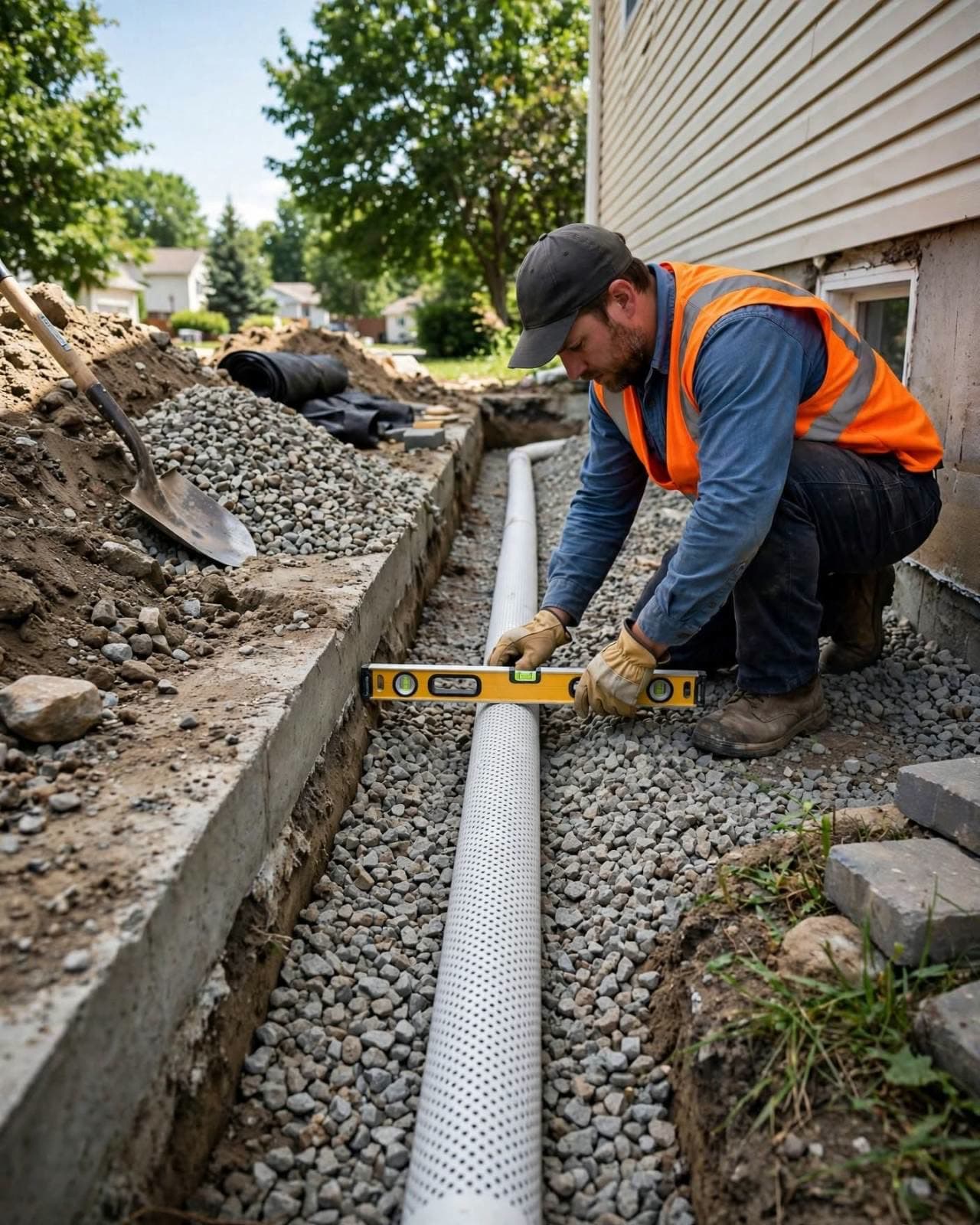
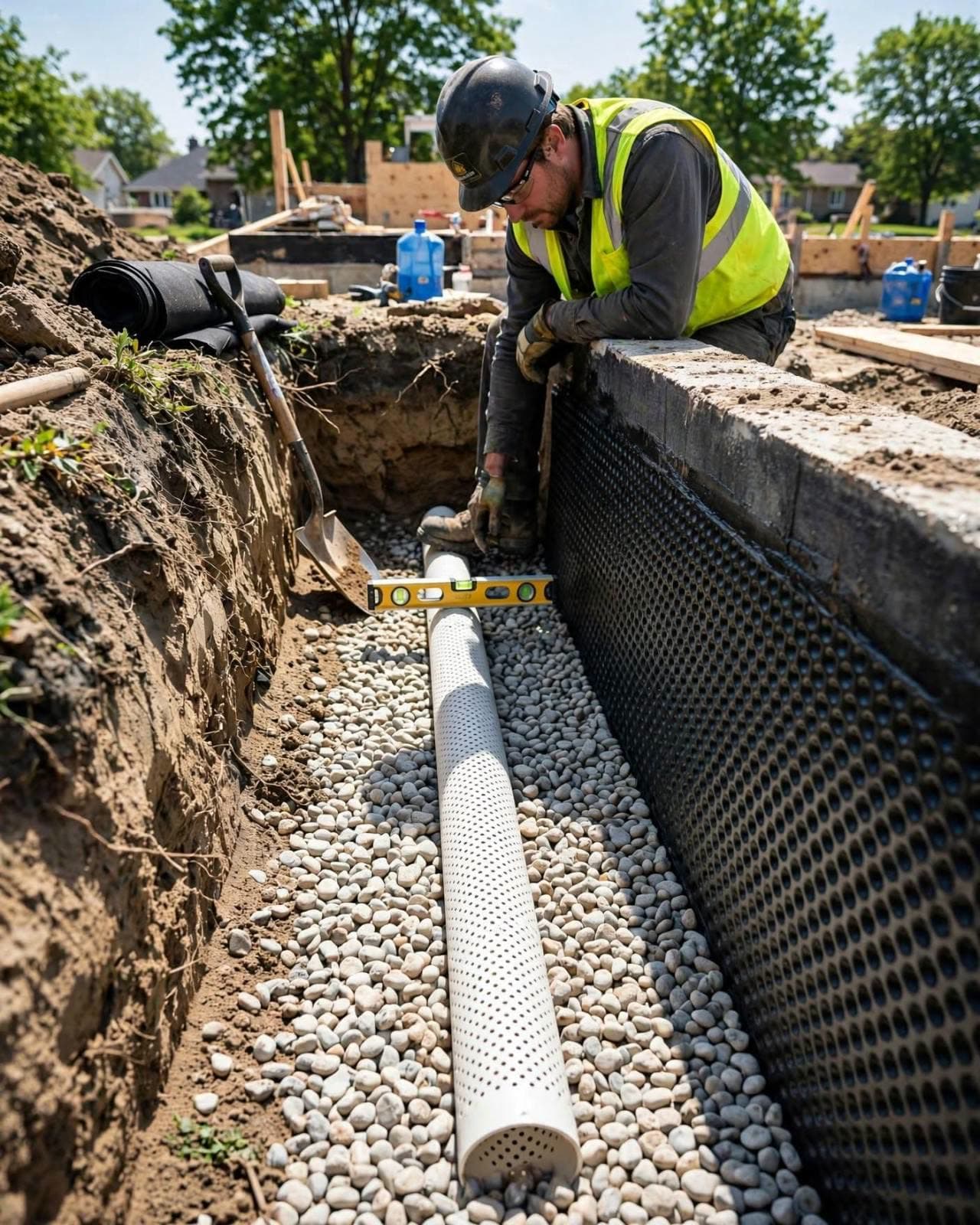
Old clay or crushed tile is dug out and replaced with new perforated pipe in filter sock, set on grade in clear gravel so it drains freely for decades.
Window well drains and covers
Each well gets a drain tied into the weeping tile so it can't fill up and spill over the sill, plus a cover to keep leaves and debris out.
Backwater valve
A backwater valve on the sanitary line stops municipal sewer backup from coming up your floor drain during a storm — one of the most common and most expensive kinds of basement flooding.
Grading and downspouts
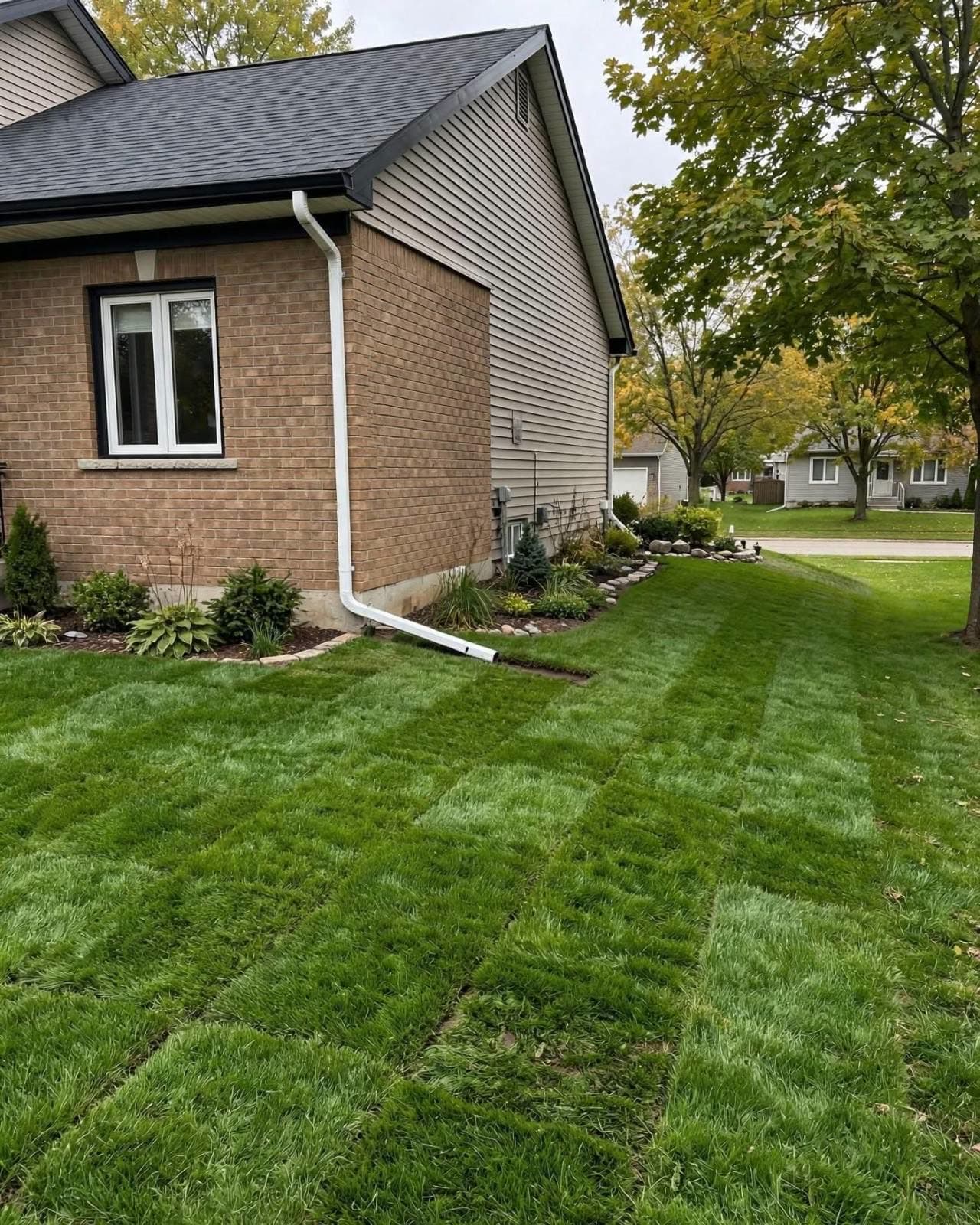
We regrade so the ground falls away from the house and extend or redirect downspouts and sump discharge so roof water never lands against the foundation.
What the work looks like
Weeping Tile & Drainage Systems FAQs
What is weeping tile and how do I know if mine has failed?
Weeping tile is the perforated pipe at the base of your foundation that collects groundwater and carries it to a sump or storm connection. Signs it has failed: water at the wall-floor joint, a sump that never runs even in heavy rain, or a house old enough to have clay tile, which collapses and silts up over time.
Will a backwater valve stop my basement flooding?
If your flooding comes up through the floor drain during storms, yes — that's sewer backup and a backwater valve is the fix. If water comes through the walls or at the floor joint, the cause is groundwater and the answer is waterproofing or drainage. We tell you which it is.
Are these subsidized?
Often. Backwater valves, sump pumps and downspout disconnection are the items most municipalities subsidize; Toronto's program covers up to $6,650 across eligible items. We'll confirm what your city offers and give you the documentation.
Everything else we do
Exterior Foundation Waterproofing
Excavate, seal and shield the outside of your foundation — the permanent fix for leaky basements.
Learn more →Interior Basement Waterproofing
Internal drainage systems that capture water at the wall and move it safely to a sump.
Learn more →24/7 Emergency Flood Response
Basement flooding right now? Our emergency crews answer around the clock, every day of the year.
Learn more →Sump Pump Installation & Repair
Primary pumps, battery backups and full replacements — the heart of a dry basement.
Learn more →Foundation Crack Repair
Injection and structural repair for cracked poured-concrete and block foundations.
Learn more →Need weeping tile & drainage systems?
Get a free, written, itemized quote — or call the 24/7 line if water is coming in right now.